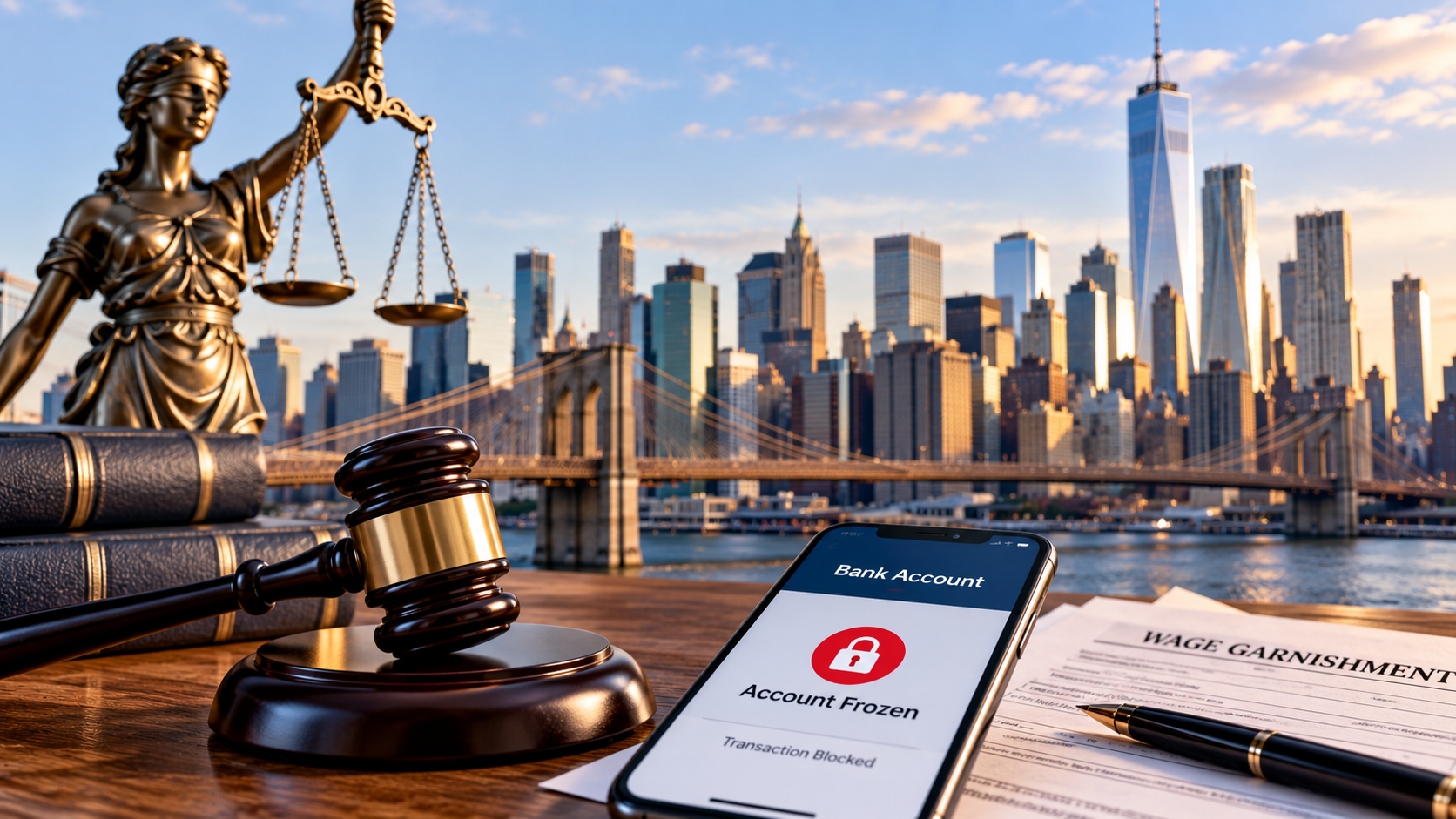



My Bank Account Was Frozen: Can Bankruptcy Help?
Discovering that your bank account has been frozen can be frightening. Many people only learn their account has been restricted when a debit card is declined, a paycheck cannot be accessed, or automatic payments begin failing.
If your account has been frozen, you may be wondering whether bankruptcy can help and what options may be available to protect your finances.
A frozen bank account is often a sign that a creditor has already taken legal action to collect a debt. In some situations, consumers do not realize a lawsuit was filed until money becomes inaccessible.
Understanding why accounts get frozen and how bankruptcy may affect collection efforts can help you make informed decisions during a stressful financial situation.
Why Was My Bank Account Frozen?
A bank account may be frozen when a creditor obtains legal authority to pursue collection of a debt.
In many situations, the process begins with:
- Missed debt payments
- Collection activity
- A lawsuit filed by a creditor
- A court judgment
- Collection enforcement actions
Once a creditor obtains a judgment, additional collection remedies may become available depending on the applicable laws and procedures.
Who Can Freeze a Bank Account?
Various creditors and government agencies may have collection rights under certain circumstances.
Examples may include:
- Credit card companies
- Debt buyers
- Collection agencies
- Private lenders
- The IRS
- State tax authorities
The authority to freeze funds depends on the type of debt, court orders, applicable law, and the facts of the individual case.
What Happens When an Account Is Frozen?
When an account becomes frozen, some or all funds may become temporarily unavailable.
Consumers often experience problems such as:
- Bounced payments
- Missed rent payments
- Utility shutoff risks
- Payroll access issues
- Overdraft fees
For many families, the inability to access bank funds quickly becomes a financial emergency.
Can Bankruptcy Help If My Account Is Frozen?
In some situations, bankruptcy may affect ongoing collection efforts.
When a bankruptcy case is filed, federal law may provide certain protections that can impact creditor collection activity.
Whether bankruptcy can help in a specific situation depends on numerous factors, including:
- The type of debt involved
- The timing of collection actions
- The chapter of bankruptcy being considered
- The status of any lawsuit or judgment
- The individual’s financial circumstances
Because timing can be important, individuals facing collection actions often seek legal advice as soon as possible.
What Is the Automatic Stay?
One of the most important protections available in bankruptcy is the automatic stay.
Upon filing a bankruptcy case, the automatic stay generally stops most collection activities, subject to certain exceptions under federal bankruptcy law.
Collection efforts commonly affected may include:
- Collection calls
- Lawsuits
- Wage garnishments
- Foreclosure actions
- Certain collection enforcement proceedings
However, the automatic stay has limitations and exceptions that depend on the type of debt, the chapter of bankruptcy filed, prior bankruptcy filings, and other legal factors. A bankruptcy attorney can explain how the automatic stay may apply to your specific situation.
Can Bankruptcy Recover Money Already Taken?
Many people ask whether bankruptcy can recover funds that were already removed from an account.
The answer depends on several legal and factual considerations, including the timing of the transfer, the status of the collection action, the type of debt involved, and whether bankruptcy law provides a basis to challenge or recover the transfer.
Every situation is unique. Individuals should consult a qualified bankruptcy attorney regarding the facts of their specific case.
Is Bankruptcy the Only Option?
Not necessarily.
While this article focuses on bankruptcy as one potential option for addressing frozen bank accounts and debt collection, bankruptcy is not appropriate for everyone.
Depending on the circumstances, some individuals may explore alternatives such as negotiating with creditors, establishing payment arrangements, resolving collection disputes, challenging the underlying judgment, or pursuing other debt-relief strategies.
Determining the most appropriate solution requires an evaluation of the individual’s financial circumstances.
What Information May Be Helpful If Your Account Is Frozen?
If you decide to consult with an attorney about a frozen account, having certain documents available may help the attorney evaluate your situation more efficiently.
These documents may include:
- Bank statements
- Court documents
- Collection notices
- Creditor correspondence
- Information about outstanding debts
- Any notices from the bank about the account restriction
An attorney can advise you on what specific information may be most relevant to your case.
Financial Warning Signs That Debt May Be Escalating
Financial difficulties often develop gradually. Common signs that debt may be becoming unmanageable include:
- Collection calls every day
- Being sued by creditors
- Wage garnishment threats
- Missed mortgage payments
- Growing credit card balances
- Using debt to pay debt
If you are experiencing multiple financial challenges, consulting with a bankruptcy attorney can help you understand your options before the situation becomes more difficult to address.
Frequently Asked Questions
Can a creditor freeze my bank account without warning?
In many cases involving private creditors, a judgment must first be obtained through a lawsuit before certain collection actions are available. However, notice requirements and procedures vary. Some government agencies may have different collection authority. The specific rules depend on the type of debt and applicable law.
Can bankruptcy stop collection efforts?
Federal bankruptcy law may provide protections that affect many collection activities after a case is filed. However, the impact depends on the facts of the case, the type of debt, the chapter filed, and whether any exceptions apply.
Can the IRS freeze my bank account?
Government agencies may have collection authority in certain circumstances. Different rules may apply depending on the type of tax debt, notices issued, timing, and available legal remedies.
Should I wait to see what happens?
Collection actions often become more difficult to address as time passes. If your bank account has been frozen, speaking with a qualified bankruptcy attorney may help you understand what options may be available.
Can I keep money in my bank account if I file bankruptcy?
The answer depends on numerous factors, including available exemptions, the type of bankruptcy filed, account balances, timing, and individual financial circumstances.
Free Consultation With Pagán López Law
Pagán López Law offers free initial consultations to discuss financial situations involving frozen bank accounts, creditor lawsuits, wage garnishment, collection activity, and bankruptcy options.
During a consultation, the firm can review your circumstances, answer your questions, and explain what legal options may be available. Consultations may be available in person, by phone, or by video conference. There is no obligation to retain the firm after a consultation.
Final Thoughts
A frozen bank account can create immediate financial stress and uncertainty. While bankruptcy may provide important protections in certain situations, every case is different and requires individual analysis.
If your account has been frozen, collection actions are increasing, or you are struggling to manage debt, understanding your legal options may help you regain control of your financial situation.
Pagán López Law – Office HQ
96-04 Northern Boulevard, Corona NY, 11368
Phone: (646) 216-8881
WhatsApp: (347) 434-3041
Email: info@paganlopezlaw.com
We are a debt relief agency. We help people file for bankruptcy relief under the Bankruptcy Code.
Attorney Advertising
This post is for informational purposes only and does not constitute legal advice. Outcomes vary by case. Consult a qualified bankruptcy attorney before taking action. Reading this post or contacting the firm does not create an attorney-client relationship.