

Can Bankruptcy Stop IRS Wage Garnishment in NY and NJ?
Introduction
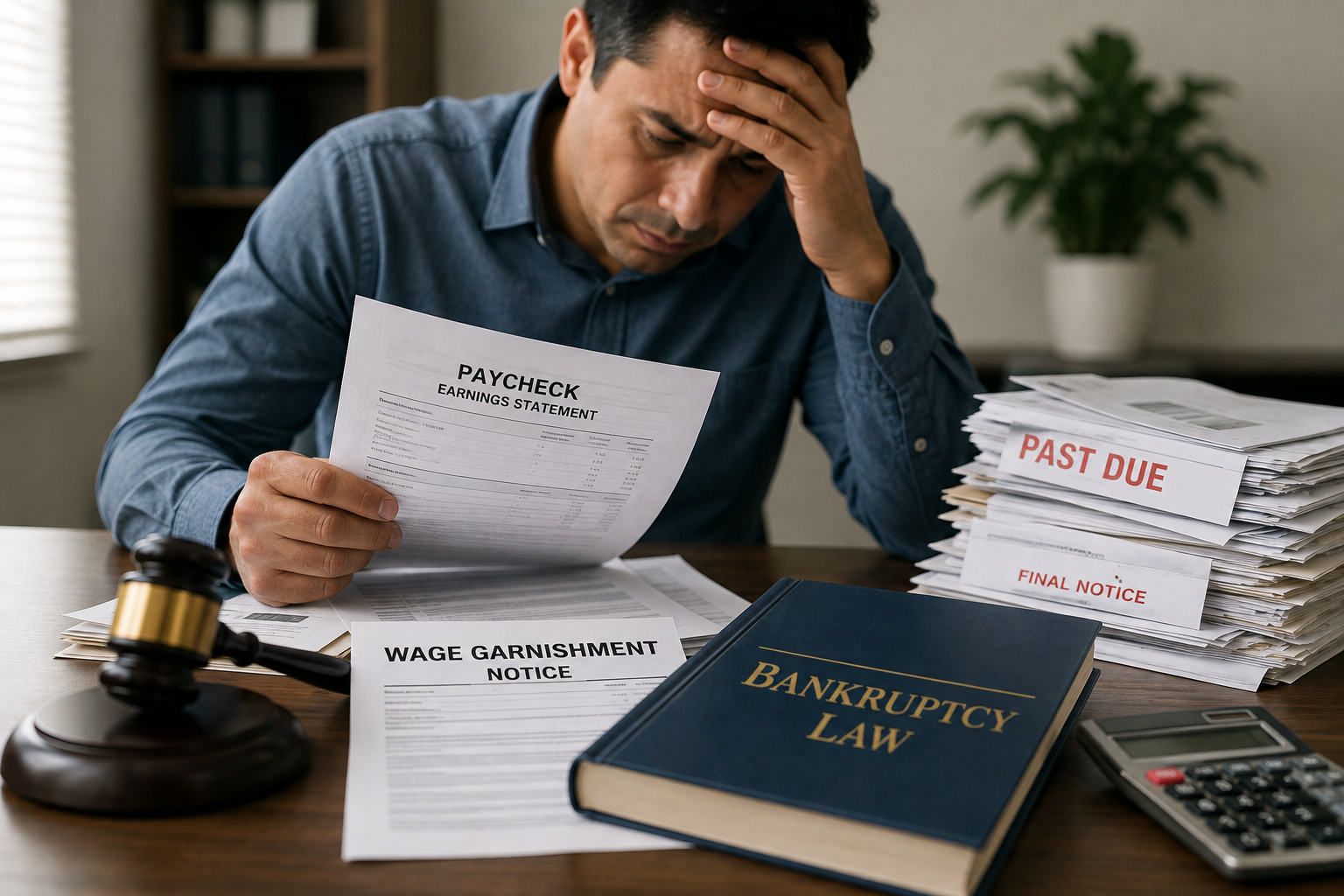
Receiving notice that the IRS plans to garnish your wages can be overwhelming. For many individuals and business owners, wage garnishment creates immediate financial pressure that affects housing, family expenses, and the ability to maintain basic financial stability. In these situations, many people begin searching for ways to stop IRS wage garnishment in New York and New Jersey.
One potential legal option is bankruptcy. Under federal bankruptcy law, filing a bankruptcy case can immediately stop most collection actions, including wage garnishments, through a mechanism known as the automatic stay. While bankruptcy does not eliminate every tax debt, it may provide powerful legal protections that can help individuals regain control of their financial situation.
What Is IRS Wage Garnishment?
IRS wage garnishment occurs when the Internal Revenue Service legally requires your employer to send part of your paycheck directly to the government to pay unpaid tax debt. This process is known as a wage levy.
Unlike some other creditors, the IRS has broad authority to collect unpaid taxes. Once a levy is issued, a portion of your wages may be withheld from every paycheck until the debt is satisfied or the levy is released.
Can Bankruptcy Stop IRS Wage Garnishment?
Yes, in many situations filing bankruptcy can stop IRS wage garnishment. When a bankruptcy case is filed, an automatic stay immediately goes into effect under federal law.
The automatic stay is a court order that temporarily stops most collection actions, including:
- Wage garnishments
- Bank levies
- Collection lawsuits
- Debt collection calls
- Certain foreclosure actions
This protection applies to the IRS as well as most other creditors while the bankruptcy case is pending.
How Chapter 7 Bankruptcy May Help
In some situations, Chapter 7 bankruptcy may permanently eliminate certain older income tax debts if legal requirements are met. If the taxes qualify for discharge, the wage garnishment related to those taxes may stop permanently.
However, strict timing rules must be satisfied for tax debts to qualify. These rules include the well-known 3-2-240 rule that applies to many income tax debts.
How Chapter 13 Bankruptcy Can Stop Garnishment
If tax debts do not qualify for discharge under Chapter 7, Chapter 13 bankruptcy may still provide relief.
Chapter 13 allows individuals to reorganize their debts through a court-approved repayment plan lasting three to five years. During this time:
- IRS collection actions are paused
- Payments are made through a structured plan
- Additional penalties and pressure may be reduced
This option can allow taxpayers to regain financial stability while resolving tax obligations in a controlled manner.
When the IRS May Resume Collections
The automatic stay does not last forever. If the bankruptcy case is dismissed or completed without resolving the tax debt, the IRS may resume collection efforts.
For this reason, evaluating the correct bankruptcy strategy before filing is important. Timing and eligibility can determine whether the tax debt may be discharged, reorganized, or remain collectible.
Common Mistakes People Make When Facing IRS Garnishment
- Ignoring IRS notices until a levy is issued
- Waiting too long to seek legal advice
- Assuming bankruptcy eliminates all tax debt
- Attempting to negotiate directly without understanding legal options
These mistakes can limit available options and make resolving tax debt more difficult.
Frequently Asked Questions
How quickly does bankruptcy stop wage garnishment?
The automatic stay generally takes effect immediately after the bankruptcy case is filed, which can stop ongoing garnishments.
Can the IRS still collect taxes after bankruptcy?
Yes. Some tax debts are not dischargeable and may still need to be paid after the bankruptcy process.
Will bankruptcy eliminate all IRS tax debt?
No. Only certain income taxes that meet legal requirements may qualify for discharge.
Can bankruptcy stop bank levies from the IRS?
In many cases, yes. The automatic stay may stop ongoing bank levies while the bankruptcy case is active.
Should I speak with a bankruptcy attorney before filing?
Yes. Because tax debt rules are complex, legal guidance can help determine the best strategy for your situation.
Conclusion
If the IRS is garnishing your wages, you are not without options. In many cases, bankruptcy can stop IRS wage garnishment in New York and New Jersey and provide time to evaluate a long-term solution. Whether through discharge of eligible tax debts or a structured repayment plan, bankruptcy law may offer protection from aggressive collection actions.
Understanding how these rules apply to your situation is critical. Speaking with a qualified bankruptcy attorney can help you determine whether bankruptcy is the right path and how to protect your financial future.
Pagán López Law – Office HQ
96-04 Northern Boulevard
Corona, NY 11368
Phone: (646) 216-8881
WhatsApp: (347) 434-3041
Email: info@paganlopezlaw.com
Attorney Advertising
This post is for informational purposes only and does not constitute legal advice. Outcomes vary by case. Consult a qualified attorney before taking action.