


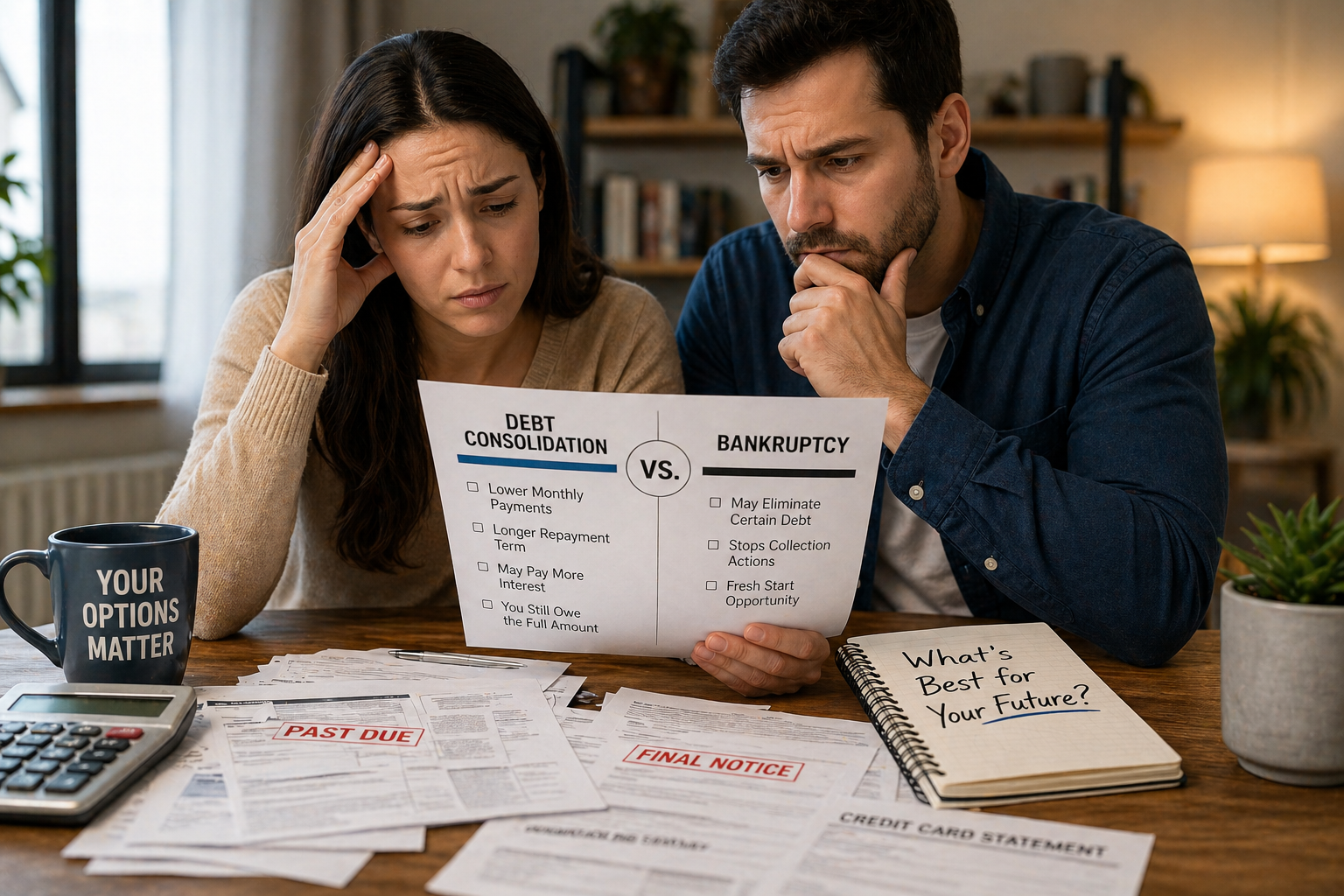
Thinking About Debt Consolidation? This Mistake Is Costing People Years of Payments
Introduction
If you are overwhelmed with debt, you may be considering debt consolidation as a solution. Many people turn to consolidation programs hoping to simplify payments and regain control.
But what most people are not told is that debt consolidation can sometimes extend your debt instead of solving it. In 2026, more individuals are entering long-term repayment plans without fully understanding the consequences.
What Is Debt Consolidation?
Debt consolidation combines multiple debts into one payment, often through a loan or structured program.
- One monthly payment
- Potentially lower monthly amount
- Simplified repayment
However, lower payments do not always mean less debt.
The Mistake Most People Are Making
The biggest mistake is focusing only on the monthly payment instead of the total cost.
- Longer repayment terms may increase total interest
- You still owe the full balance
- Debt may take years to resolve
This can create the illusion of progress while the debt remains largely unchanged.
What Debt Consolidation Programs Don’t Always Explain
- Some creditors may not participate
- Missed payments can restart collections
- Total repayment may increase over time
Without a full understanding, consolidation may delay rather than fix the problem.
When Debt Consolidation May Not Work
- Debt is too high relative to income
- You are facing lawsuits or garnishment
- Interest continues to grow faster than payments
In these situations, consolidation may extend financial stress instead of resolving it.
When Bankruptcy May Be a Better Option
Bankruptcy is a legal process designed to provide relief when debt becomes unmanageable.
Chapter 7
May eliminate certain unsecured debts, depending on eligibility.
Chapter 13
Allows structured repayment over time, often with court protection from creditors.
- Can stop collection actions through the automatic stay
- May reduce or eliminate qualifying debts
- Provides a structured path forward
The right option depends on your financial situation and eligibility.
Debt Consolidation vs Bankruptcy: Key Differences
- Debt Consolidation: reorganizes debt without eliminating it
- Bankruptcy: may eliminate or restructure debt under federal law
- Consolidation: long-term repayment commitment
- Bankruptcy: legal protection from creditors
What About Your Credit?
Both options can affect your credit, but in different ways.
- Debt consolidation may keep accounts active longer
- Bankruptcy may impact credit initially but can allow a faster reset
In some cases, resolving debt sooner may provide a clearer path to rebuilding credit.
Common Mistakes That Cost People Time and Money
- Choosing consolidation without comparing options
- Focusing only on monthly payments
- Waiting too long to take action
- Ignoring legal solutions
These mistakes often result in years of unnecessary payments.
When Should You Speak With an Attorney?
- If your debt continues to grow
- If you are facing lawsuits or collections
- If consolidation is not reducing your balance
- If you want to understand all legal options
Evaluating your situation early can help you avoid long-term financial damage.
Frequently Asked Questions
Does debt consolidation reduce my debt?
Not always. In many cases, you repay the full amount over time.
Can bankruptcy eliminate debt?
It may eliminate certain debts depending on eligibility and the chapter filed.
Does consolidation stop collections?
Not necessarily. Collections may continue if payments are missed.
Conclusion
Debt consolidation can help in some situations, but it is not always the best solution. For many people, it leads to longer repayment periods and higher total costs.
Understanding the difference between consolidation and bankruptcy can help you make a more informed decision and protect your financial future.
Pagán López Law – Office HQ
96-04 Northern Boulevard, Corona NY, 11368
Phone: (646) 216-8881
WhatsApp: (347) 434-3041
Email: info@paganlopezlaw.com
Attorney Advertising
This post is for informational purposes only and does not constitute legal advice. Outcomes vary by case. Consult a qualified attorney before taking action.