


ATTORNEY ADVERTISING
IMPORTANT LEGAL NOTICE: This article provides general educational information only and does not constitute legal advice. It does not evaluate any person’s financial situation, eligibility for bankruptcy relief, wage garnishment, exemptions, debts, assets, or legal rights. Reading this article, contacting Pagán López Law, or requesting a consultation does not create an attorney-client relationship. An attorney-client relationship is established only after both the client and the firm execute a written representation agreement.
Can Bankruptcy Stop a Wage Garnishment? What New York and New Jersey Residents Should Know
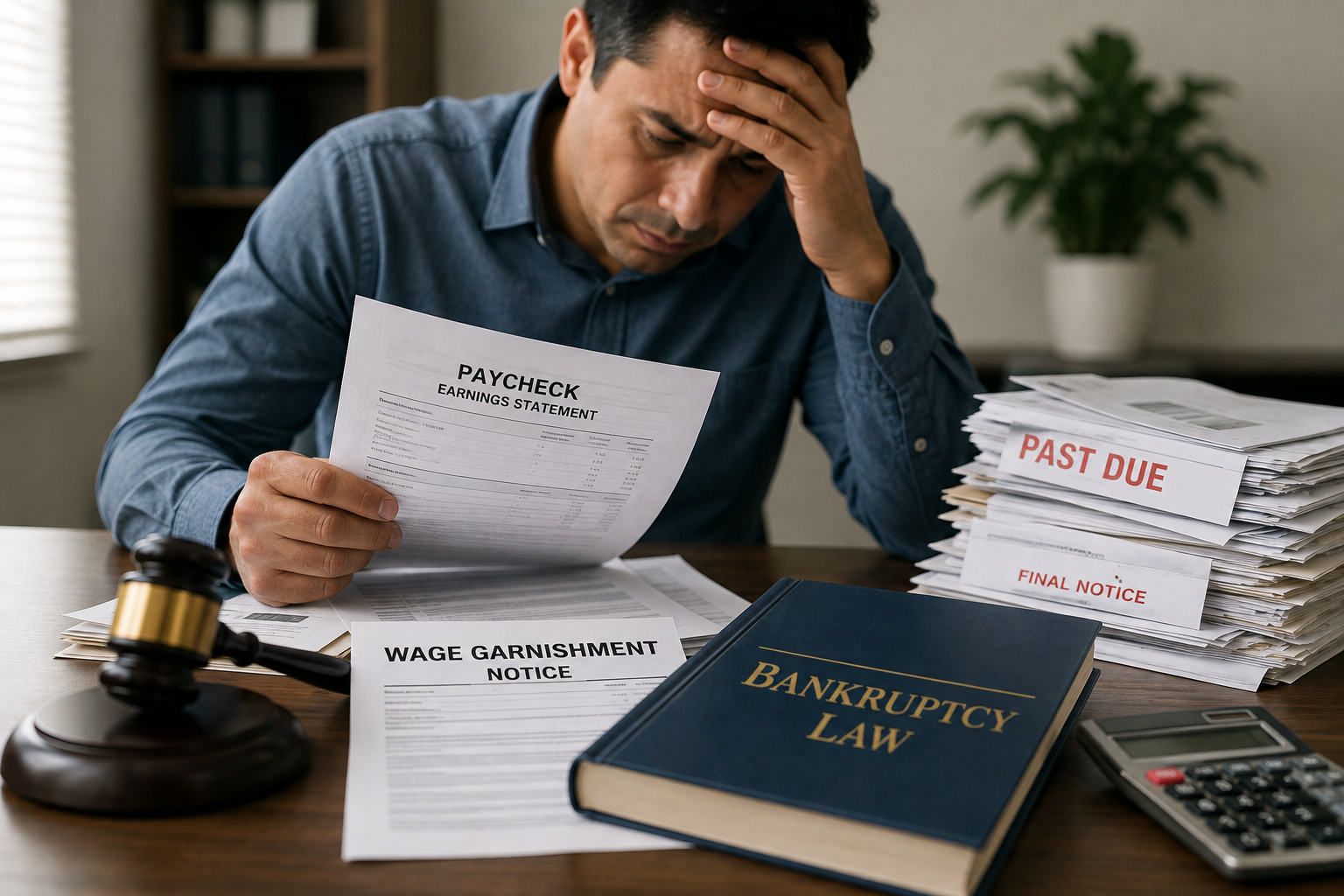
For many individuals and families, discovering that money has been taken directly from a paycheck can create immediate financial stress. Wage garnishment may make it difficult to pay rent, purchase groceries, keep up with utility bills, or meet other everyday expenses.
One of the most common questions people ask is whether filing for bankruptcy can stop a wage garnishment.
The answer depends on several legal factors, including the type of debt, the chapter of bankruptcy filed, whether a court judgment exists, and the specific circumstances of the case.
Understanding how bankruptcy and wage garnishment interact may help individuals make informed decisions about their financial future.
What Is Wage Garnishment?
Wage garnishment is a legal process through which part of a person’s earnings may be withheld by an employer and sent to a creditor or government agency to satisfy a debt.
In many situations, garnishment occurs only after certain legal procedures have been completed, although some government obligations may follow different rules.
The amount that may be withheld depends on applicable federal and state law.
What Types of Debts May Result in Wage Garnishment?
Depending on applicable law, wage garnishment may arise from various types of debts, including:
- Credit card judgments
- Medical debt
- Personal loans
- Deficiency balances
- Certain civil judgments
- Child support
- Alimony
- Federal student loans
- Certain tax obligations
- Other legally enforceable debts
Not every unpaid debt results in wage garnishment, and different rules apply depending on the nature of the obligation.
Can Bankruptcy Stop Wage Garnishment?
In many situations, filing a bankruptcy case may stop ongoing wage garnishment through a legal protection known as the automatic stay.
Generally speaking, the automatic stay is a federal injunction that takes effect immediately upon the filing of a bankruptcy petition.
The automatic stay generally prevents many creditors from continuing collection activities while the bankruptcy case is pending.
However, important exceptions exist, and bankruptcy does not stop every type of garnishment.
Whether a particular garnishment stops depends on the facts of the case and applicable bankruptcy law.
What Is the Automatic Stay?
The automatic stay is one of the most significant protections available under the United States Bankruptcy Code.
Depending on the circumstances, it may temporarily stop:
- Wage garnishments
- Lawsuits
- Collection calls
- Collection letters
- Bank levies
- Certain foreclosures
- Certain repossessions
- Other collection efforts
The scope of the automatic stay depends on numerous legal and factual considerations.
Does Chapter 7 Stop Wage Garnishment?
Chapter 7 bankruptcy may stop many wage garnishments after the bankruptcy petition is filed.
Chapter 7 generally focuses on eliminating qualifying unsecured debts, although not every debt is dischargeable.
Whether wage garnishment stops—and whether it remains stopped—depends on the type of debt and other legal considerations.
Does Chapter 13 Stop Wage Garnishment?
Chapter 13 bankruptcy may also trigger the automatic stay.
Unlike Chapter 7, Chapter 13 generally involves a court-approved repayment plan over several years.
Depending on the circumstances, Chapter 13 may allow individuals to reorganize certain debts while maintaining regular payments under court supervision.
Whether Chapter 13 is appropriate depends on the individual’s financial circumstances and eligibility requirements.
Are There Exceptions?
Yes.
Certain obligations may not be affected by the automatic stay or may be treated differently under bankruptcy law.
Depending on applicable law, exceptions may include:
- Certain child support obligations
- Certain alimony obligations
- Certain criminal fines
- Some tax obligations
- Certain governmental enforcement actions
- Other debts specifically excepted by federal law
Each situation requires individualized legal analysis.
Can Money Already Garnished Be Returned?
Not necessarily.
Money already withheld before a bankruptcy filing is not automatically returned.
In limited situations, bankruptcy law may provide legal remedies involving certain transfers or recoveries.
Whether any previously garnished wages may be recoverable depends on the timing of the payments, the amount involved, the applicable chapter, exemptions, and other legal factors.
Will Filing Bankruptcy Eliminate Every Debt?
No.
Although bankruptcy may discharge many debts, some obligations may survive bankruptcy.
Examples may include:
- Certain taxes
- Some student loans
- Child support
- Alimony
- Certain debts involving fraud
- Certain criminal obligations
- Other debts identified by federal law
Determining whether a particular debt is dischargeable requires careful legal analysis.
Common Misunderstandings About Bankruptcy and Wage Garnishment
“Bankruptcy Stops Every Wage Garnishment.”
Not necessarily.
Some garnishments may continue because federal law creates exceptions to the automatic stay.
“My Employer Can Fire Me Because I Filed Bankruptcy.”
Federal law provides certain protections regarding employment discrimination based solely on bankruptcy filings, although every employment situation is different.
“If My Paycheck Was Garnished Yesterday, Bankruptcy Automatically Gives My Money Back.”
Not necessarily.
Whether previously garnished wages may be recovered depends on multiple legal and factual issues.
“I Have Too Much Debt to File Bankruptcy.”
Not necessarily.
Eligibility depends on numerous factors, including income, assets, debts, and the bankruptcy chapter being considered.
Frequently Asked Questions
When does the automatic stay begin?
Generally, the automatic stay begins immediately after a bankruptcy petition is filed, although exceptions may apply.
Does bankruptcy stop every collection action?
No. Some collection activities are excepted from the automatic stay under federal law.
Can bankruptcy stop a garnishment for credit card debt?
In many situations, yes, provided the garnishment involves a debt subject to the automatic stay.
Can bankruptcy stop child support garnishment?
Not necessarily. Child support obligations are treated differently under federal bankruptcy law.
Which bankruptcy chapter is better?
There is no single answer. Whether Chapter 7, Chapter 13, or another option may be appropriate depends on each person’s financial circumstances, legal goals, assets, income, and applicable law.
What Information May Be Helpful If Your Wages Are Being Garnished?
Individuals facing wage garnishment may benefit from understanding the legal options available before making important financial decisions.
Information that may be relevant includes:
- The court judgment, if any
- Recent pay stubs
- Garnishment notices
- Collection correspondence
- Information about assets and debts
- Tax returns
- Income documentation
Generally, individuals facing wage garnishment are encouraged to seek advice from a qualified bankruptcy attorney, as only an attorney who reviews the specific facts can provide individualized legal guidance.
Final Thoughts
Wage garnishment can create significant financial hardship, but legal options may be available depending on the circumstances.
Bankruptcy may stop many wage garnishments through the automatic stay, but it does not stop every type of collection activity, nor does it automatically eliminate every debt.
Every financial situation is unique. The legal options available depend on the specific facts, applicable federal law, state law, and the individual’s financial circumstances.
Individuals experiencing wage garnishment should rely on individualized legal advice rather than assumptions or information found online.
Pagán López Law
Office HQ
96-04 Northern Boulevard
Corona, NY 11368
Phone: (646) 216-8881
WhatsApp: (347) 434-3041
Email: info@paganlopezlaw.com
Free Initial Consultation
Pagán López Law offers a free initial consultation to provide general information about the bankruptcy process and discuss whether the firm may be able to assist.
The consultation is informational only and does not constitute legal advice or create an attorney-client relationship.
An attorney-client relationship is established only after both the client and Pagán López Law execute a written representation agreement.
Legal Disclaimer
This article is provided for general informational and educational purposes only and does not constitute legal advice. The information may not reflect the most recent legal developments and should not be relied upon as a substitute for advice from a qualified attorney regarding your individual circumstances.
Reading this article, visiting this website, submitting an online form, calling the firm, or communicating with Pagán López Law does not create an attorney-client relationship. An attorney-client relationship is established only after the firm has agreed to represent you and a written representation agreement has been signed by both the client and the firm.
Confidentiality Notice: Please do not send confidential or sensitive information by email, website forms, text message, WhatsApp, social media, or other electronic communications before an attorney-client relationship has been formally established. Communications made before representation begins may not be protected by the attorney-client privilege.
Prior Results: Prior results do not guarantee a similar outcome. Every legal matter depends on its own facts, circumstances, applicable law, available evidence, and procedural history.
Jurisdictional Notice: Pagán López Law is licensed to practice law in New York and New Jersey. Bankruptcy law is federal, but exemptions, collection procedures, and related rights may vary by jurisdiction. Individuals should seek advice from an attorney authorized to practice in the appropriate jurisdiction regarding their specific circumstances.
ATTORNEY ADVERTISING