


ATTORNEY ADVERTISING
IMPORTANT LEGAL NOTICE: This article provides general educational information only and does not constitute legal advice. It does not analyze any individual’s immigration status, admissibility, eligibility for immigration benefits, enforcement risk, or removal proceedings. Reading this article, contacting Pagán López Law, or requesting a consultation does not create an attorney-client relationship. Representation begins only after the firm agrees to represent a client and a written representation agreement is executed.
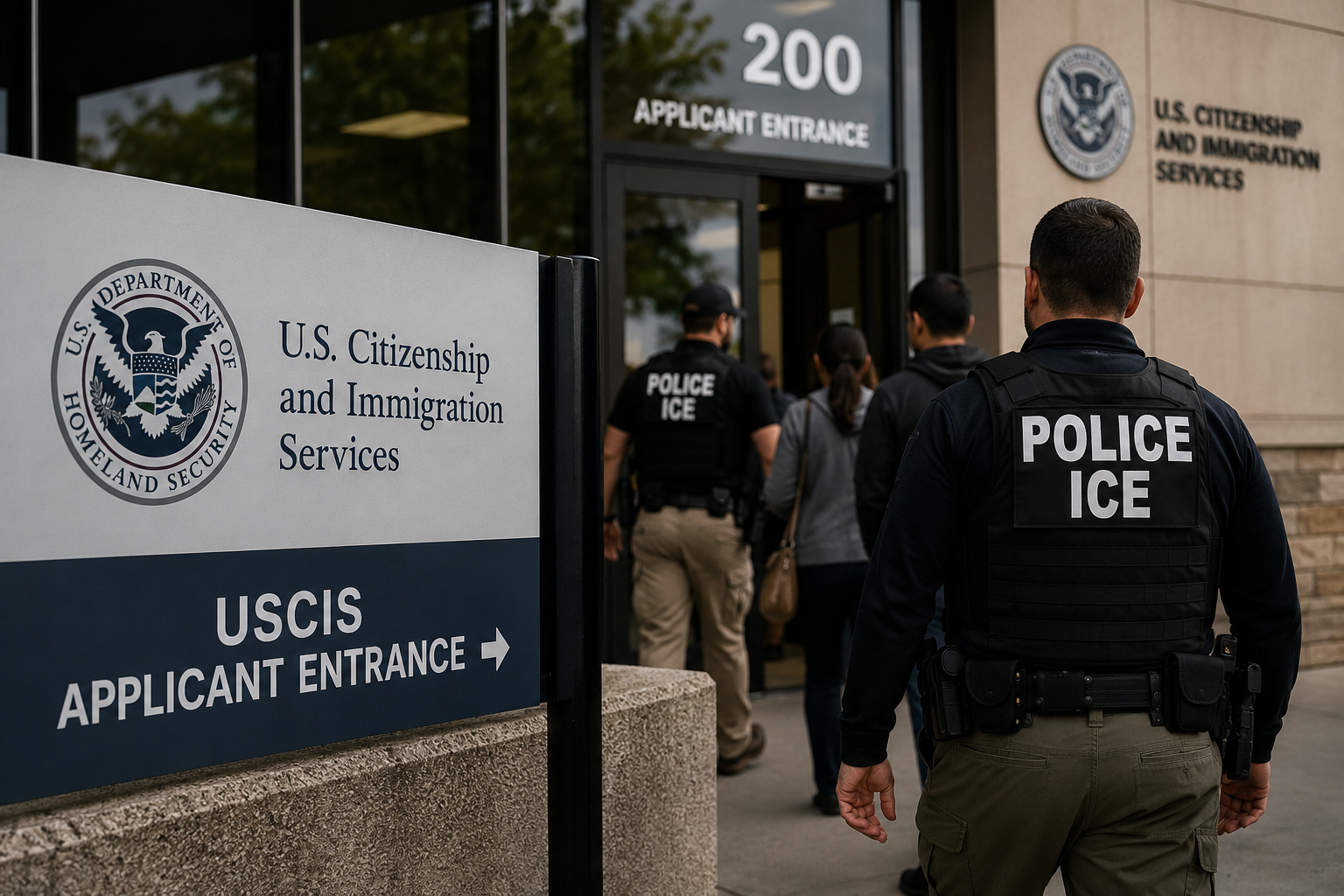
Can ICE Arrest You at Your USCIS Interview? What Immigrants in New York and New Jersey Should Know
Many immigrants spend months—or even years—waiting for a USCIS interview. Receiving an appointment notice may feel like an important step toward obtaining lawful immigration status, permanent residence, naturalization, employment authorization, or another immigration benefit.
However, recent news reports and discussions on social media have caused some applicants to ask an urgent question: Can ICE arrest someone during or after a USCIS interview?
The answer is not a simple yes or no. Many USCIS interviews conclude without immigration enforcement activity. However, a scheduled USCIS appointment does not provide immunity from arrest, detention, or removal proceedings. The potential risk depends on the individual’s immigration history, prior proceedings, criminal record where applicable, existing government orders, current enforcement policies, and other case-specific circumstances.
Why Are Applicants Concerned About USCIS Interviews?
Some applicants have read reports describing individuals who were detained during or after immigration appointments. These reports may create fear, particularly among people with prior removal proceedings, unresolved immigration violations, criminal history, or uncertainty about their current legal status.
Individual incidents should not be interpreted as proof that everyone attending a USCIS interview faces the same risk. Immigration enforcement decisions are fact-specific, and online rumors frequently omit important legal and procedural details.
Applicants should avoid making significant immigration decisions based solely on social media posts, anecdotes, or generalized online information.
What Is the Difference Between USCIS and ICE?
USCIS and ICE are separate agencies within the U.S. Department of Homeland Security, and they generally perform different functions.
USCIS
U.S. Citizenship and Immigration Services generally reviews and adjudicates applications and petitions for immigration benefits, including:
- Adjustment of status and lawful permanent residence
- Naturalization
- Family-based immigration petitions
- Employment authorization
- Humanitarian immigration benefits
- Certain waivers and other immigration applications
ICE
U.S. Immigration and Customs Enforcement generally performs immigration enforcement functions, which may include:
- Investigations
- Immigration detention
- Enforcement of certain removal orders
- Representation of the federal government in removal proceedings
- Other enforcement activity authorized by federal law
Although the agencies have different primary responsibilities, information may be shared among federal agencies when authorized by law, regulations, and applicable government policies.
Can ICE Arrest Someone at a USCIS Interview?
Immigration enforcement activity may occur at or near a USCIS office in certain circumstances. Attending a USCIS interview does not automatically prevent ICE or another authorized federal agency from taking enforcement action.
At the same time, having a USCIS appointment does not mean that an arrest will occur. Many applicants attend interviews, complete the process, and leave without enforcement activity.
The potential risk cannot be determined solely from the appointment notice. A meaningful assessment may require review of the applicant’s complete immigration and criminal history, prior filings, government records, and current procedural posture.
What Factors May Increase Enforcement Concerns?
Factors that may require closer legal review include:
- An outstanding or final order of removal
- Previous removal or deportation proceedings
- Prior immigration violations
- Prior removal followed by reentry into the United States
- Failure to attend a previous immigration court hearing
- Outstanding warrants
- Criminal arrests or convictions where applicable
- Identity, fraud, or misrepresentation concerns
- Prior applications containing inconsistent information
- Pending investigations or enforcement matters
The presence of one of these factors does not automatically determine what will happen. Likewise, the absence of a known concern does not guarantee that no issue exists. The legal significance of each factor depends on the applicable law and the person’s complete history.
Can USCIS Share Information With ICE?
Federal immigration agencies may share certain information when authorized by federal law, agency policy, regulations, court orders, or government information-sharing procedures.
Information submitted in an immigration application may include names, addresses, immigration history, prior entries and departures, family information, employment history, criminal-history disclosures, and supporting documentation.
Applicants should provide truthful and accurate information. False statements, omitted material facts, fraudulent documents, or inconsistent information may create serious immigration or criminal consequences.
Because information-sharing rules and enforcement policies may change, applicants should obtain current legal guidance rather than relying on outdated articles or generalized assumptions.
Does a Pending Immigration Application Protect Someone From Arrest?
Not necessarily.
Submitting an application or having a pending USCIS case does not automatically provide lawful immigration status, protection from arrest, or immunity from removal proceedings.
Some pending applications may provide particular procedural protections or may be connected to authorized periods of stay or employment authorization. Others may not provide those protections. The legal effect depends on the type of application, the applicant’s prior status, immigration history, and applicable law.
Should Someone Skip a USCIS Interview Because of Fear?
Skipping a USCIS interview may create significant consequences. Depending on the application, USCIS may consider the request abandoned, issue a denial, request additional information, or take another procedural action.
However, this does not mean every applicant should attend without first evaluating serious legal concerns. An individual who believes there may be a prior removal order, criminal issue, misrepresentation concern, or other significant problem should consider obtaining individualized legal advice before the appointment.
The decision to attend, request rescheduling, withdraw an application, or take another action should not be made solely from general online information.
What May Happen During a USCIS Interview?
The interview process depends on the immigration benefit being requested. A USCIS officer may:
- Verify the applicant’s identity
- Review the application and supporting evidence
- Ask questions about immigration history
- Review prior entries, departures, or applications
- Ask about criminal history where relevant
- Request clarification regarding inconsistent information
- Request additional documents
- Issue a decision or continue the case for further review
The officer may not issue an immediate decision. A case may remain pending, receive a request for evidence, be scheduled for another interview, or be referred for additional review.
What May Applicants Review Before an Interview?
After consulting with a qualified immigration attorney where appropriate, an applicant may consider reviewing:
- The complete application or petition submitted to USCIS
- Supporting evidence previously provided
- Prior immigration applications and petitions
- Entry and departure history
- Prior immigration court documents
- Any removal, deportation, or voluntary-departure records
- Criminal court records where applicable
- The USCIS appointment notice and document requirements
Applicants should not guess, invent answers, or submit altered or false documentation. When an applicant does not understand a question or does not remember a fact, it may be important to state that honestly rather than provide inaccurate information.
Can an Attorney Attend the USCIS Interview?
An applicant may generally be represented by a qualified attorney or accredited representative in USCIS proceedings, subject to applicable rules and filing requirements.
An attorney may help review the application, identify potential legal issues, prepare the applicant for the interview, explain the process, and attend the appointment when permitted.
Attorney representation does not guarantee approval or prevent lawful enforcement activity. However, individualized legal review may help an applicant better understand potential concerns before appearing.
What If Someone Is Detained During or After the Interview?
If a person is detained, family members may need to obtain and preserve relevant information, including:
- The individual’s full legal name
- Date of birth
- Alien Registration Number, if available
- Date and location of the appointment
- Information regarding the agency involved
- Any paperwork issued before or during the detention
- The location where the individual may have been transported
Immigration detention and removal proceedings may involve strict deadlines. Prompt legal consultation may be important to determine whether bond, relief from removal, motions, appeals, or other legal options may be available.
Common Misunderstandings About USCIS Interviews
“USCIS Cannot Share My Information With ICE.”
Not necessarily. Federal agencies may share information when authorized by law or policy.
“Everyone Who Attends a USCIS Interview Risks Arrest.”
No. Many applicants complete their interviews without enforcement activity. Individual risk depends on case-specific circumstances.
“A Pending Application Protects Me From Removal.”
Not automatically. The legal effect of a pending application depends on the type of filing and the applicant’s circumstances.
“If I Miss the Interview, USCIS Will Simply Reschedule It.”
Not necessarily. Failure to appear may result in delay, denial, abandonment, or other procedural consequences depending on the application and circumstances.
“An Attorney Can Guarantee That Nothing Will Happen.”
No attorney can guarantee approval, prevent all enforcement activity, or promise a particular outcome. Legal counsel can evaluate risks, explain applicable law, and help prepare an applicant based on the available facts.
Frequently Asked Questions
Can ICE arrest someone inside a USCIS office?
Federal immigration enforcement may occur at or near a USCIS office when authorized by law. Whether it occurs in a particular case depends on the individual’s circumstances and current enforcement practices.
Does a USCIS appointment provide legal status?
No. An appointment notice confirms that an interview or other appointment has been scheduled. It does not, by itself, grant immigration status or protection from enforcement.
Can someone with a removal order attend a USCIS interview?
The legal risks may be significant and depend on the type and status of the removal order, the application being pursued, and other circumstances. An individual in this situation should obtain case-specific legal advice before the appointment.
Can a person reschedule a USCIS interview?
USCIS may permit rescheduling in certain circumstances, but procedures and consequences vary. A request to reschedule does not guarantee approval and may delay the case.
Does requesting a lawyer make someone look guilty?
Seeking legal advice is not an admission of wrongdoing. Immigration law is complex, and applicants may consult or retain qualified legal counsel to understand their rights and obligations.
Can a lawyer determine whether an arrest will happen?
No attorney can predict with certainty whether enforcement will occur. An attorney may review the applicant’s history, identify legal concerns, and provide an individualized assessment based on available information and current law.
Final Thoughts
A USCIS interview can be an important part of the immigration process, but an appointment does not create immunity from immigration enforcement.
Most interviews do not result in arrest. However, applicants with prior removal orders, criminal history, immigration violations, inconsistent filings, or other significant concerns may face different risks.
Before making decisions that may affect an immigration case, applicants should rely on accurate information and obtain individualized legal advice when appropriate.
Pagán López Law – Office HQ
96-04 Northern Boulevard, Corona NY, 11368
Phone: (646) 216-8881
WhatsApp: (347) 434-3041
Email: info@paganlopezlaw.com
We are a debt relief agency. We help people file for bankruptcy relief under the Bankruptcy Code.
Attorney Advertising
This post is for informational purposes only and does not constitute legal advice. Outcomes vary by case. Consult a qualified attorney before taking action. Reading this post or contacting the firm does not create an attorney-client relationship.